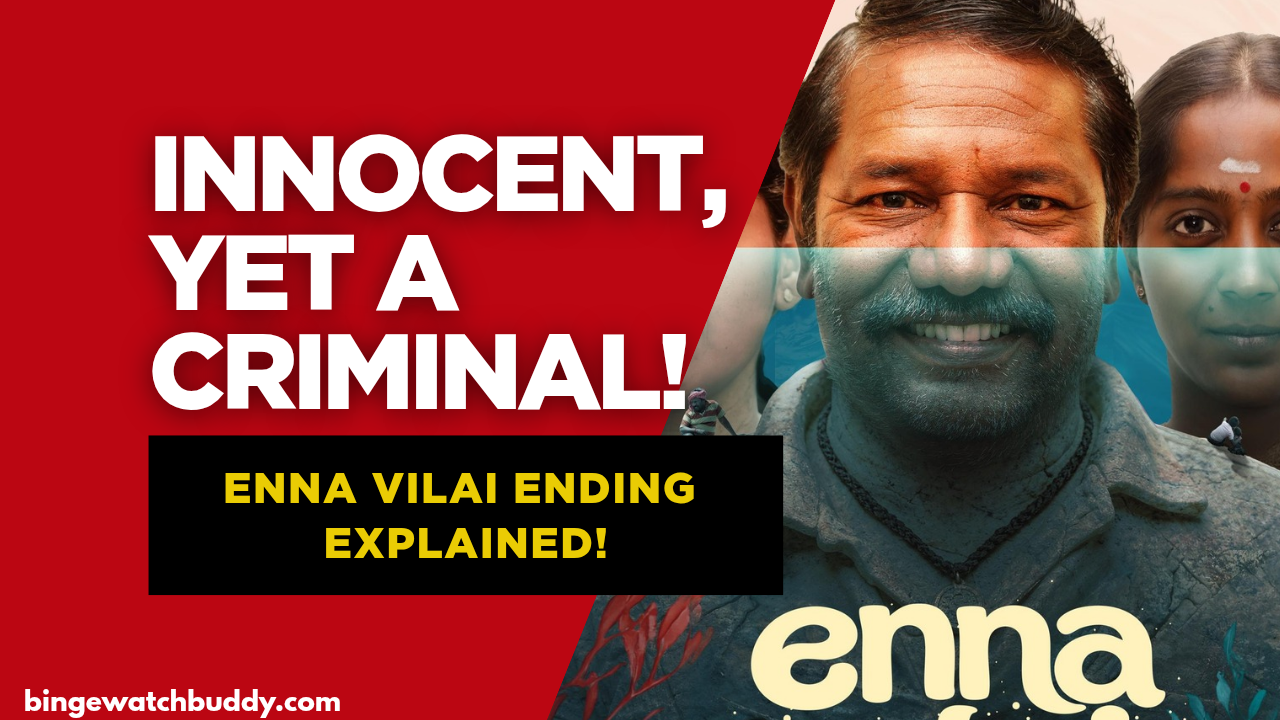
Hello friends, I’m Ayush. I’ve just watched the movie Enna Vilai. So let’s break down what the film wants us to understand and what its final scene really means.
How Thavasi’s Honesty Turns Against Him
The story is about a poor fisherman named Thavasi, who earns his living by collecting coins thrown into the sea by pilgrims. One day, he finds a gold locket. If someone else were in his place, he could have sold it and made a fortune.
But Thavasi, showing honesty, hands the locket over to the police, making a mistake.
Had he kept it, he might not have had to endure so much. Because these days, there’s no guarantee of what one will get back even after being honest.
But now the real game begins. A corrupt police officer removes a precious stone- a pearl or a green diamond from the locket and accuses Thavasi of theft.
Now, the man who showed honesty becomes a thief in the eyes of the law. But the real pain of this story is not just the false accusation.
Just think: when a poor person is accused of theft, people don’t first inquire about the truth, but instead pass judgment based on their status.
The same thing happens with Thavasi; people distance themselves from him. His family also has to face embarrassment, even though they are not at fault.
Why a Court Verdict Isn’t Enough for Justice
At this point, the film raises a crucial question: if you are innocent, but the entire world perceives you as a criminal, can a court verdict alone ever truly restore your life to what it once was?
We often assume that once an innocent person receives justice, the story ends. But when the police, society, and the system collectively ruin someone’s life, who will make amends for it?
The humiliation endured by his family,
the things his children have had to hear,
the shame with which Thavasi has lived his days—
can all of this truly be compensated for by a mere legal verdict? That is why Kanchana demands a public apology from the government—so that the innocence of a man who was branded a criminal in the eyes of the public can be acknowledged just as openly.
Enna Vilai Ending Explained: What Does the Final Scene Mean?
And now, let’s turn to the film’s final scene, which reveals the true meaning of the entire story: Kanchana looks directly into the camera and says, “This verdict is not just for you.” When she looks toward the camera, it feels as though she is speaking straight to us, the audience—a technique known as “breaking the fourth wall.”
In other words, this verdict is not meant solely for Thavasi; it is for every ordinary person whose dignity has been stripped away by the system, the media, or society.
The film shows us that what happened to Thavasi today could just as easily happen to someone else tomorrow.
Now, those who had misconceptions about Thavasi, thinking he was a thief, are finally starting to see the situation change. Now, the atmosphere seems to be changing. Posters with apologies are seen everywhere. People invite him over for tea.
The injustices Thavasi suffered are being publicly acknowledged, and apologies are being offered to him. Meanwhile, the fact that Thavasi has returned to selling toys signifies his gradual transition back to a normal life.
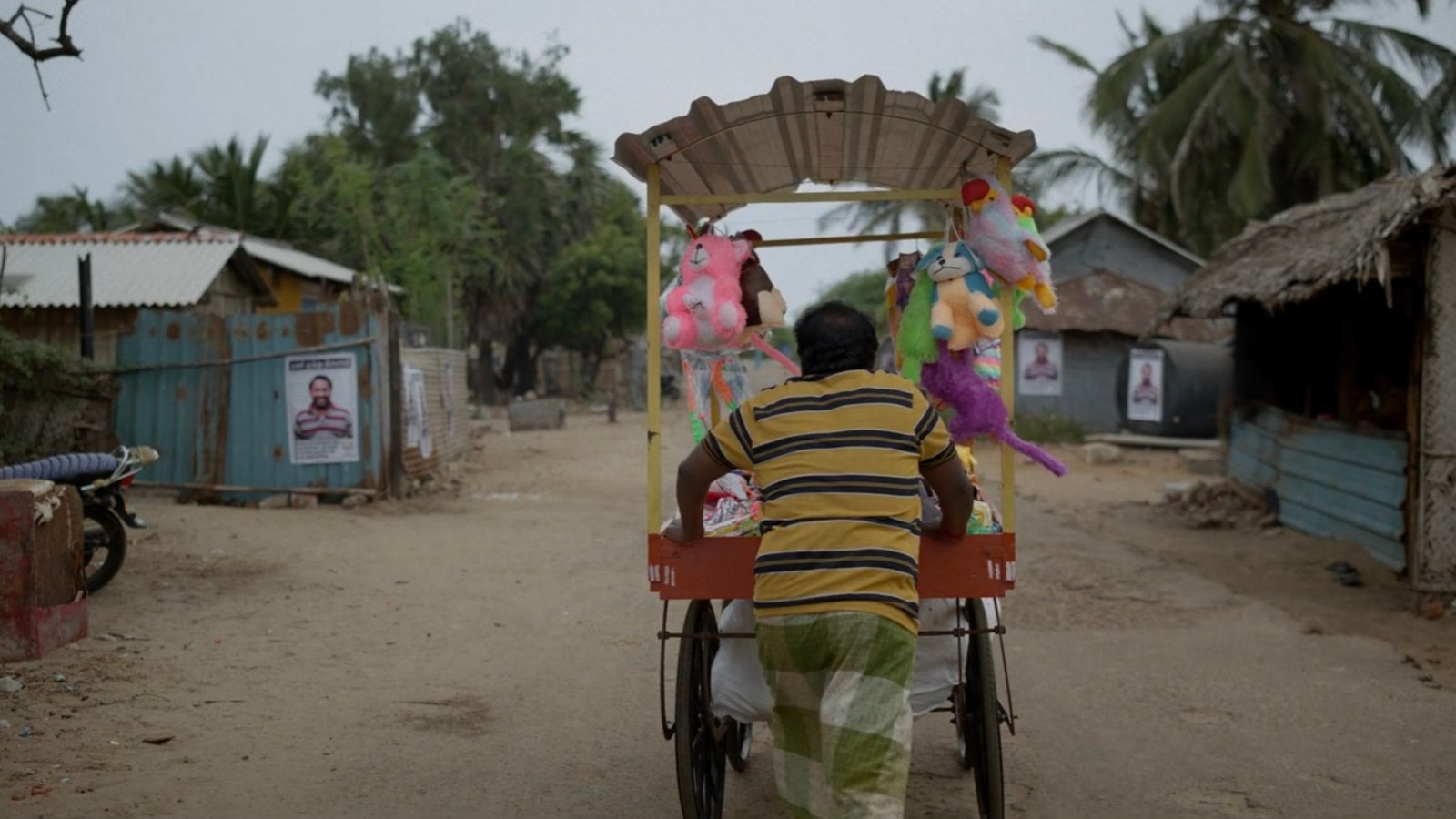
He is no longer just a man branded a criminal; he is an individual living with dignity. And this, in essence, is the true conclusion of the film.
What Is the Real Meaning of Enna Vilai?
Proving one’s innocence in a court of law is not the entirety of justice. True justice is served only when the system acknowledges its error and society restores the individual’s lost honour.
The price of a gold locket can be measured in monetary terms. But who can determine the value of a person’s dignity, the honor of their family, or the trust that has been shattered within them?
This is precisely why the film’s title, Enna Vilai, carries such significance—after all, what is the price of one’s dignity?
In my view, the film’s most powerful message is this: while it is incredibly easy to defame an innocent person, restoring their dignity is an immensely difficult task.
What did you think of the film’s ending? Do you believe that a court verdict declaring someone innocent is sufficient, or should the authorities also offer a public apology to those wrongfully implicated in false cases? Let me know your thoughts in the comments.