Disclaimer: This article contains spoilers.
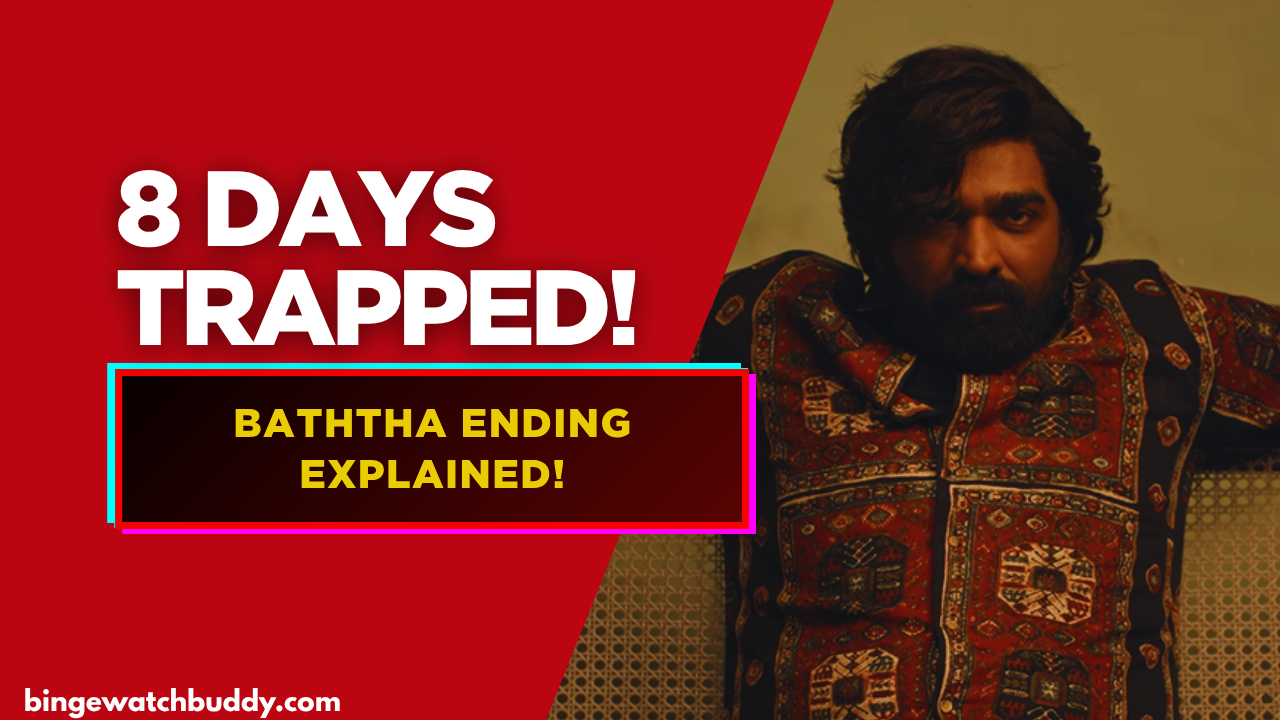
A man who discards the food prepared by his wife, dismissively asking, “Is this even food?” ends up trapped inside a locked restroom, forced to eat stale, rock-hard scraps (kadak pav) just to stay alive for eight days. The story of how a small child transforms a man whose very name once made an entire city tremble is sure to bring tears to your eyes. So, if possible, stay tuned.
Baththa’s Reputation as a Feared Gangster
The story begins in 1986. A young boy named Sabari is out for a stroll on the beach with his parents when he spots a toy. He insists on having it, and his father buys it for him. From then on, Sabari is inseparable from the toy; he even sleeps with it clutched tightly against his chest.
The next day, while heading to school with his toy, Sabari encounters a sudden commotion in the marketplace. A dangerous gangster named Baththa is brutally beating a man named Jyoti in the middle of the market. Jyoti’s wife clings to Baththa’s feet, begging for mercy, while their daughter cries in distress. Everyone in the market is so terrified of Baththa that no one dares to intervene to save Jyoti.
Witnessing this, young Sabari who is standing among the crowd is overcome with terror; he begins to tremble uncontrollably. Later, when he reaches school, he finds his classmates also talking about nothing but Baththa.
One boy recounts that Baththa once beat a man in his neighborhood severely, breaking his arms and legs.
Another boy says that an uncle in our neighborhood was sitting at home singing. Now, who knows why Baththa bhai took offense to this, so he beat up the uncle and threw him in the dustbin.
A third boy claims that no one can ever harm Baththa, as he is so powerful that once, when the police locked him up in jail, he simply broke out.
Hearing all these stories, Sabari begins to feel afraid even at the mere mention of Baththa’s name.
Meanwhile, at the hospital, we see Jyoti. Her brother comes to visit her and tells her that they won’t be able to live a peaceful life until they get rid of Baththa. They begin making arrangements to bring in men from outside to take care of Baththa.
Elsewhere, in the middle of the night, Baththa returns home, where his wife, Kannima, and daughter, Thenu, are waiting for him. Angrily, Kannima scolds him, pointing out that their daughter is growing up. She asks, “You’re always getting into fights have you ever stopped to think about what would happen to us if one of your enemies were to kill you?” Baththa, however, remains completely indifferent; he simply sits down quietly with his daughter and starts watching television.
When Kannima brings him some food, Baththa tosses the plate aside after the very first bite, demanding, “Is this even food?” He storms out of the house in a rage. Kannima tries to stop him, weeping, but Baththa leaves with his men.
The following evening, Baththa arrives home, intoxicated. Kannima, feeling deeply dejected, takes him to their daughter and reminds him that Thenu has grown up. Hearing this, Baththa’s mood shifts, and he becomes happy. He tells Kannima, “I’m going to throw a huge party I’ll invite everyone!”
Baththa begins making plans for the party.
How Sabari Accidentally Trapped Baththa Inside the School Washroom
The next day, exams were underway at Sabari’s school. It was his final day there, as summer vacation was set to begin the following day. However, instead of completing his exam paper, Sabari was busy playing with his toy. Seeing this, his class teacher took the toy away and placed it inside a cupboard in the staff room.
After school ended, Sabari returned home, but he felt restless without his toy. The next morning, before his parents could wake up, he slipped out of the house and managed to sneak into the school, making sure no one saw him.
The entire school was deserted. Sabari managed to enter the staff room through a window, opened the cupboard, and retrieved his toy. As he began to head back home, his stomach started rumbling. He went to the school washroom to freshen up, but then realized he had left the cupboard door in the staff room wide open.
Sabari returned to the staff room and closed the cupboard door. As he stepped out, he noticed that the washroom door was also open, so he closed it.
Suddenly, a loud banging came from the other side of the door. A man’s voice demanded that he open it. As Sabari moved to unlock the door, a voice from inside growled, “I am Baththa! Open the door, or I’ll kill you!”
The mere mention of the name ‘Baththa’ makes Sabari’s limbs tremble. Overcome with fear, Sabari flees without even opening the door. When he reaches home, his limbs are still shaking. He reasons that if Baththa could break out of prison, he would surely be able to break down the door as well.
Meanwhile, inside the washroom, Baththa attempts to force the door open with his shoulder, but ends up only causing himself pain. In a fit of rage, he kicks the door, but immediately clutches his foot and cries out in agony. He looks up toward the small ventilation window and shouts for help, but there is no one around to hear him.
He then stacks all the buckets in the washroom on top of one another, climbs up, and tries to break the window. However, he loses his balance, falls, and sustains an injury to his lower back.
All his attempts to escape prove futile.
Eight Days of Fear: How Sabari Kept Baththa Alive
By evening, news spreads throughout the area that Baththa has been missing since morning. People begin to speculate, suggesting that one of his enemies might have killed him. Baththa’s wife and daughter are deeply distressed, and his associates are searching for him everywhere. Only Sabari, however, knows that Baththa is locked inside the school washroom.
In his innocent mind, the thought arises that Baththa might starve to death there. Early in the morning his mother asks him to take money from his father’s shirt and bring milk. Sabari takes some extra money from the same shirt and heads to a shop in the market. He buys some hard, crusty bread (kadak pav) and makes his way to the school washroom.
As soon as he hears Sabari’s footsteps, Baththa begins to shout, calling out the names of his various enemies and demanding to know who is there. Terrified, poor Sabari remains silent. He quietly breaks the pav into pieces, slides them under the door, and flees back home.
Meanwhile, Baththa’s wife goes to the police station with her daughter to file a missing person’s report. The police begin their own search for Baththa.
Sabari, wanting to alert others that Baththa is trapped in the school washroom, writes a note about him and tosses it into the market. But the very next moment, fear takes hold he realizes that if he does this, Baththa will discover that it was he who locked him in the washroom, and that Baththa might kill him for it. Overcome by fear, he quickly retrieves the note.
Meanwhile, in the stinky washroom, Baththa starts feeling terrible. His isolation slowly begins to crush his mighty ego. He starts missing his wife and his sweet daughter. He remembers how he used to yell at Kannima over petty things. Yet, Kannima always loved him. He had even raised his hand against Kannima once.
Baththa begins to wonder: “If I die here, what will happen to my wife and daughter? Who will look after them?” He finds himself dwelling on the happy moments he once shared with them. In this state, three or four days pass by.
Sabari comes to the school every morning and evening, sliding pieces of “kadak pav” (crisp bread) under the door for him to eat. Baththa pleads with him, promising that he means no harm and begging only to be let out. But, gripped by fear, Sabari cannot summon the courage to open the door.
Eight days pass in this manner. And one morning, after feeding Baththa, when Sabari returns home, his mother tells him that today they are all going to his grandmother’s house in the village. She urges Sabari to get ready quickly, which fills him with dread. He wonders: if he leaves for his grandmother’s place, who will feed Baththa? Without food, Baththa would surely starve to death.
Finally, Sabari decides to open the door. He takes a long rope to the school, places a table in front of the washroom door, and ties the rope to the latch. Stepping back, he pulls the rope, causing the latch to open; terrified, Sabri immediately runs away and hides.
Baththa’s Near-Death Experience Changes Everything
However, when Baththa still doesn’t emerge from the washroom after a long while, Sabari begins to feel uneasy, his heart starts racing with anxiety. Trembling, he opens the door and enters the washroom, but the sight that greets him leaves him frozen in shock.
Baththa lies unconscious inside the water tank. Sabari tries to wake him, but there is no movement from Baththa’s body. Fearing that Baththa has died, Sabari runs out of the school, weeping. On the way, he tells a man that Baththa is lying dead in the school washroom. The man calls out loudly, gathering a crowd of people.
Baththa’s wife, Kannima, along with their daughter Thenu and Baththa’s men, rush to the school. In the ensuing haste, Baththa is taken to the hospital.
Upon learning that Sabari was the first to discover Baththa, the men bring him to the hospital. Sabari is trembling with fear; he worries that if Baththa survives and finds out that he was the one who locked him in the washroom, Baththa might kill him.
However, as soon as he arrives at the hospital, Kannima Baththa’s wife embraces him. Weeping, she tells him, “You are like a god to me; it is because of you that Baththa is alive today.” Hearing that Baththa has survived, a faint smile appears on Sabari’s face. He learns that while inside the washroom, Baththa had been bitten by a venomous snake, which caused him to lose consciousness.
The doctors explain that had the door not been opened in time or had there been even a slight delay in getting him to the hospital Baththa would certainly have died.
Kannima asks Sabari, “The school was closed; what were you doing there?” Taken aback, Sabari quickly concocts a story: he claims he had gone to the school to retrieve a toy, and while on his way back, he felt the need to use the washroom where he discovered Baththa lying unconscious.
Shortly after, Sabari’s parents arrive at the hospital, and he recounts the same story to them as well. A while later, Baththa regains consciousness; seeing Kannima and Thenu crying before him, he, too, begins to weep. Having stared death in the face, all his arrogance has vanished. He embraces his wife and daughter, overcome with emotion.
Kannima explains to Baththa that it was because of Sabari that his life was saved. Baththa immediately asks Sabari, “What were you doing at the school when it was closed?” Sabari tells him about the incident involving the toy, which leaves Baththa with one burning question: who exactly had locked him in the restroom?
Baththa’s men begin searching for the culprit. In front of Sabari, one of the men declares to Baththa, “The moment we find the person who locked you in the restroom, I will tear them to pieces.” Hearing this, the poor child is left completely shaken.
After this, one of Baththa’s men asks him, “Brother, what were you doing in the school washroom?” Baththa replies that it is a secret he will reveal later. Some time passes, and Baththa is discharged from the hospital.
Baththa returns home, but he has undergone a complete transformation. A man who once wouldn’t hesitate to break someone’s limbs over the slightest provocation has now become remarkably calm. He even gives up drinking alcohol, a change that brings great joy to Kannima. She, too, asks Baththa why he had gone into the school washroom, but he remains tight-lipped.
Meanwhile, Baththa’s men visit every vendor in the market who sells “kadak paav” (a type of hard bread roll), inquiring about the customers who purchased them.
Baththa also devises a plan to track down his adversary. He decides to invite not only his friends but also all his enemies to a party he is hosting to celebrate his daughter growing up. He reasons that by observing their reactions when he personally delivers the invitation cards to their homes, he might be able to figure out who had locked him in the washroom.
The first invitation card is delivered to the home of Sabari, the very person who had saved his life. Upon seeing Baththa, Sabari is visibly shaken. However, he soon notices that Baththa is speaking to his parents with great warmth and kindness. As Baththa hands them the invitation card, Sabari finds it hard to believe that the dangerous thug a man whose very name used to make him tremble could actually be such a decent human being.
Baththa takes Sabari along with him to the market. He buys some expensive clothes for Sabari, just as he does for his own daughter, Thenu. Sabari, feeling apprehensive, tries to decline, but Baththa insists, “You saved my life; I owe you a debt. From this day forward, you are like a son to me.” Touched by this gesture, Sabari feels deeply moved, yet he remains fearful terrified that Baththa might one day discover the truth about him.
How Sabari Taught Baththa the Meaning of Humanity
One day, when Baththa visits Sabari’s home for some reason, he finds Sabari’s father, Thiru, injured. Sabari’s mother explains that a man working at the factory had assaulted him. Hearing this, Baththa’s blood boils. He immediately accompanies Thiru to the factory and begins beating the man responsible. Just then, the factory manager arrives on the scene.
Upon seeing the manager, Thiru becomes visibly anxious. Baththa explains that he is beating the man because he had attacked Thiru, but when the manager asks about it, Thiru claims that the man did not hit him.
Stunned, Baththa falls silent, unable to fathom why Thiru would lie. He returns home with Thiru, remaining quiet and refusing to speak to him.
Thiru then explains, “I am not a coward. But had I told the truth in front of the manager, he would have fired that man. The man is extremely poor; what would happen to his wife and children if he lost his job? I lied only to ensure they wouldn’t suffer.”
Hearing this, Baththa realizes for the first time that not every battle can be won through brute force or intimidation. An ordinary person is not a coward; rather, they endure hardships in silence for the sake of their family’s well-being. Baththa begins to reflect on his own past mistakes.
The next morning, he goes to the house of his greatest enemy, Jyoti the very man he had once beaten in the middle of the marketplace, in front of his wife and daughter. Today, however, he approaches Jyoti with folded hands, offering an apology and inviting him to a function at his home.
Baththa Discovers Who Locked Him Inside the Washroom
Meanwhile, the shopkeeper informs Baththa’s men that, ever since Baththa went missing, a boy had been coming by daily to purchase “kadak paav” (crispy bread). He notes that the boy stopped coming the moment Baththa returned.
Following this, Baththa’s men take the shopkeeper along and begin searching the entire city for the boy. Elsewhere, moved by Baththa’s kind behavior, Sabari decides to reveal the truth to him. Gathering his courage, he goes to Baththa’s house, where preparations for the function are underway. As Baththa prepares to head out for some errand, Sabari joins him on his motorcycle.
On the way, Baththa stops the bike at the very shop where Sabari used to buy the “kadak paav” for him. Upon seeing Sabari with Baththa, the shopkeeper immediately recognizes him. He asks Baththa, “Who is this?” to which Baththa replies, “He is my son.” The shopkeeper laughs and says, “This is the same boy who used to buy “kadak paav” from my shop every day! I suspected it might be him, but since he’s your son…”
Hearing this, the color drains from Baththa’s face as memories begin to flood back, one by one. Yet, for the moment, he remains completely silent. He quietly has Sabari sit back on the motorcycle and brings it to a stop under a tree just outside the village.
Sabari was trembling with fear. Baththa, meanwhile, remained oblivious to the truth; he was simply distressed by the sight of the “kadak pav” (hard bread rolls) displayed in the shop, a sight that invariably triggered terrifying flashbacks of the time he had been locked inside a school bathroom. Baththa remarked that he had come to loathe “kadak pav”.
Sabari explained to Baththa that he had only enough money to afford “kadak pav”, which is why he had consistently provided them. Weeping, Sabari confessed everything revealing that he had intended to unlatch the door, but had fled in terror after Baththa threatened to kill him.
However, when his mother spoke of leaving for his grandmother’s house, Sabari summoned the courage to open the door; he realized that if he left, there would be no one left to feed Baththa. “I never wanted to kill you,” he said, “but I was so afraid of you that I simply couldn’t bring myself to open the door.”
Upon hearing the truth, Baththa fell silent for a long moment. Then, he pulled the boy close and embraced him. It dawned on him that, throughout his entire life, he had earned neither respect nor true power only the ability to instill fear in others. The fear was so profound that even a small child would tremble at the mere mention of his name. Yet, despite this, the child possessed enough humanity to ensure that, even in the grip of his own terror, he did not let Baththa starve to death.
After this, feeling happy, he takes Sabari with him and heads home. Suddenly, Jyoti’s men block his path and launch an attack on Baththa. Baththa fights back fiercely, giving them a sound thrashing. They intend to kill him, but just then, Baththa’s own men arrive on the scene. They seize Jyoti and attempt to kill her, but Baththa intervenes and stops them.
He decides to spare Jyoti’s life, as he now wishes to live like an ordinary man. Seeing this transformation in Baththa, Jyoti’s anger subsides, and their long-standing enmity comes to an end.
Upon returning home, Baththa reveals the entire truth about Sabari to his wife, Kannima, and expresses deep remorse for his past actions. Kannima offers him her support, and that night, after shedding tears, Baththa finally finds peace and drifts into a restful sleep.
Why Did Baththa Become a Gangster? His Biggest Secret Revealed
The next morning, when Baththa visits Sabari at his home, Sabari asks him, “Why did you go into the school restroom?” Upon hearing this, a shy smile spreads across Baththa’s face. He begins to open up to Sabari about his past.
As it turns out, Baththa had a passion for singing since childhood; he dreamed of becoming a singer. However, his voice was so off-key that whenever he sang, people would mock him. Once, when he sang in class as a child, a girl and the rest of his classmates burst into loud laughter at his expense.
Humiliated by that incident, Baththa vowed that if people wouldn’t applaud his singing, he would become such a notorious thug that they would tremble in fear of him. Yet, even after becoming a thug, the singer within him never truly died. He wanted to sing a song for his daughter, Thenu, at her party. But he feared that if he sang at home, people would mock him all over again. That is why he had gone to the school restroom to practice singing in secret, away from everyone else.
Baththa Ending Explained: A Gangster Finally Earns Respect
Hearing this, Sabari cannot hold back his laughter. He encourages Baththa, telling him that he should come to the party, adding that he has a very good voice. Emboldened by this praise, Baththa gathers his courage and, that evening, steps onto the stage at the party to sing.
People from the entire neighborhood have gathered at the party. Seeing Baththa standing at the microphone, Kannima grows anxious, fearing that everyone might flee once he starts singing. However, Sabari seated on a chair right in front of Battha encourages him, smiling and gesturing for him to begin.
Baththa finally starts to sing; he sings like a true artist a father singing for his beloved daughter.
When the song ends, there is complete silence throughout the venue. Baththa opens his eyes and, seeing the stillness, becomes frightened; he assumes he has ruined everything by singing off-key once again.
But then, breaking the silence, Sabari rises from his chair and begins to applaud loudly. Seeing this, Thenu and Kannima join in, and in an instant, the entire audience stands up, the venue erupting in a thunderous round of applause.
The recognition and respect that Baththa had longed for since childhood were finally his. He steps down from the stage and embraces Sabari. The innocence of a small child has transformed the life of a gangster, and with this beautiful moment, the film comes to an end.
I highly, highly recommend that everyone watch this film at least once in their life. If you haven’t seen it yet, I can assure you that you certainly won’t regret the time you invest in watching it. As for the rest, I’ll see you very soon in a content review or an ending explanation.