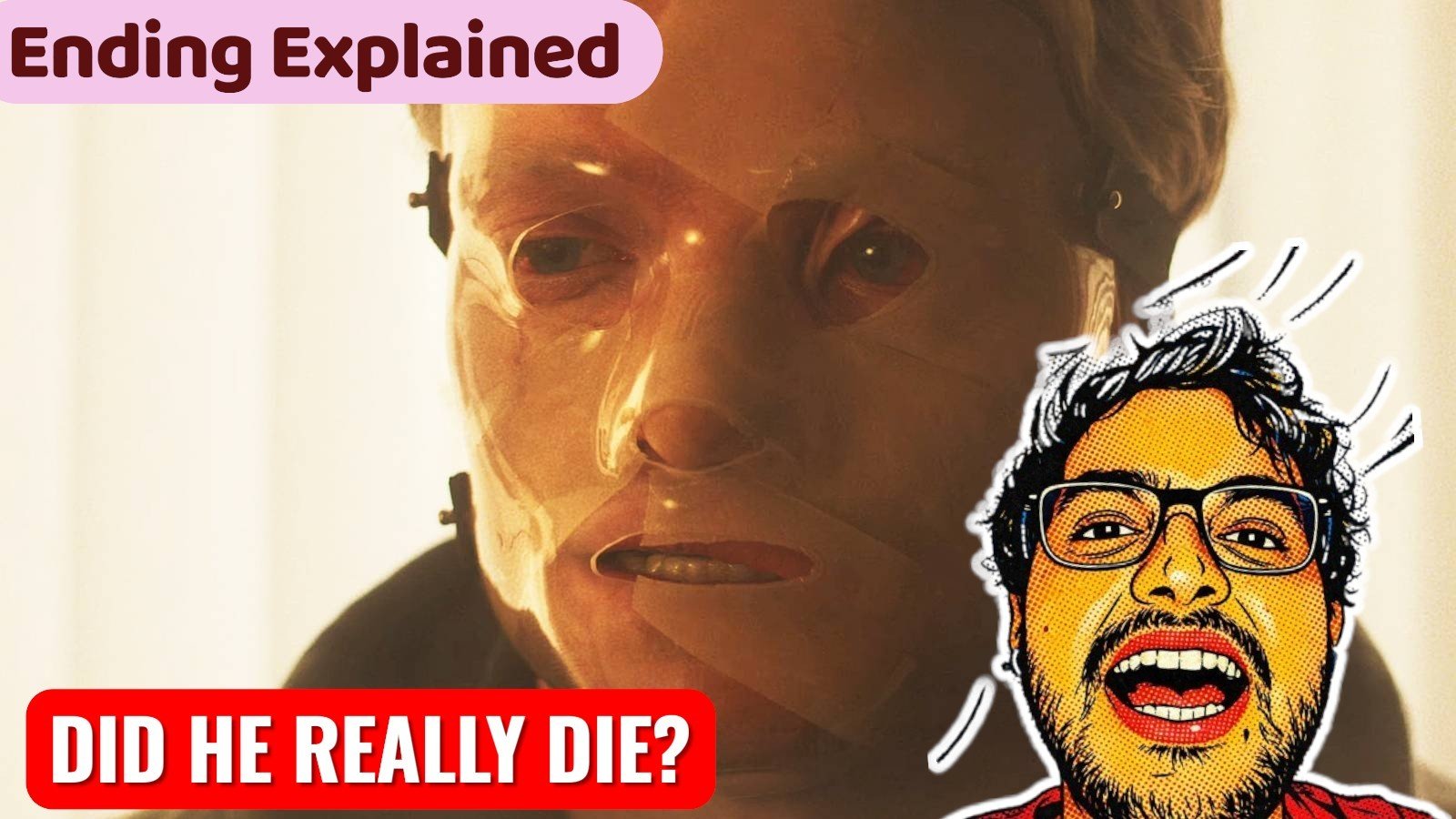
How is everyone doing? In the DCU’s Gotham City, Batman is currently absent, but that doesn’t mean dangerous villains can’t emerge. A prime example of this is Matt Hagen.
He is an actor whose life begins with fame and success, only to end in his transformation into a monster capable of assuming anyone’s appearance; in other words, he can easily shape-shift.
However, the ending of Clayface isn’t just about Matt’s transformation; it also explores how, in a desperate attempt to preserve his identity, a person can end up losing it completely.
The biggest question remains: can Matt still control himself, or has he fully become Clayface?
In this breakdown, we’ll explore the ending, examine theories stemming from the post-credits scene, and look at what this means for the future of the DCU, specifically how the emergence of Clayface might reshape the future of the DCU and, by extension, the future of Batman.
Disclaimer: This article contains spoilers for the movie or series discussed, including key plot details, twists, and ending explanations. If you haven’t watched it yet and wish to avoid spoilers, consider watching it before reading further.
Clayface Ending Explained: Matt Hagen’s Tragic Transformation
Matt Hagen is a successful actor, currently at the peak of his career and on the verge of winning an Oscar. However, his life changes completely after spending a single night with Mia Torrez.
Mia’s boyfriend, the gangster Markos Szabo, discovers them together in bed, both naked. Naturally, Markos doesn’t take this lightly; he brutally disfigures Matt’s face, destroying the very feature that defined his good looks.
To further ruin his reputation, Matt is also falsely accused of drugging and raping Mia.
Matt undergoes various surgeries and attempts to seek justice in court. But Szabo is no ordinary street thug; he is a powerful crime boss who manages to evade the law by bribing the system, walking away completely unscathed and maintaining his standing.
Matt loses his case, his fortune, and sees his career crumble.
It is important to understand that for Matt, his face was more than just his physical appearance; as an actor, his entire identity was tied to his face and his public image. With both stripped away, he felt he had nothing left to lose.
How Matt Hagen Became Clayface
In the depths of this desperation, he crosses paths with Dr Caitlyn Corr, who is experimenting with AI-powered nanotechnology. These nanobots have the capability to repair damaged tissue, and Caitlyn begins treating Matt using this technology.
Initially, the treatment proves unexpectedly successful. However, during a premiere, the stress causes Matt’s face to begin deteriorating once again.
Fearing that he might lose his entire life all over again, Matt takes an overdose of the nanobots—a decision that turns the treatment into a new, complex problem for him.
Now, Matt is no longer limited to fixing his face; he can alter his entire body shape and assume the appearance of anyone he chooses. He puts this ability to use, and watching it unfold is genuinely entertaining.
Yet, along with these new powers, his desire for revenge becomes even more dangerous.
Matt begins hunting down those who ruined his life. His lawyer, who betrayed him, and an old friend from his acting days become his first victims.
Ultimately, he arrives at Szabo’s nightclub. Using his powers, he kills Szabo and all the men who had subjected him to such brutality; he also kills Mia.
But that’s not all.
Why Matt Hagen Kills John Borrelli
Up until this point, it was possible to view Matt as a revenge-driven anti-hero. He had been wronged; there’s no doubt about that, but his quest for vengeance was gradually moving beyond the realm of justice. The clearest proof of this lies in the murder of John Borrelli.
John acts as a fence for Caitlyn, but he also works for the Gotham City Police Department. When he begins to grow suspicious of Matt, Matt decides to eliminate him. However, this time, the motive isn’t just to protect his own secrets.
Matt has fallen in love with Caitlyn and wants to spend the rest of his life with her. That is why he kills John and assumes his identity. This is the precise moment when Matt’s transformation into a villain truly begins.
Previously, Matt was taking revenge on those who had wronged him; John, however, had done him no harm. Matt killed him solely because he wanted to be with Caitlyn.
He is no longer trying to reclaim his own identity; instead, he has stolen someone else’s to live the life he desires.
But Matt’s scheme doesn’t last long. Caitlyn soon discovers the truth—one day, she returns home to find Matt disguised as John, and she also uncovers the body of the real John Borrelli.
Caitlyn now realises just how dangerous the person she once tried to save through her experiment has become.
She attempts to deactivate the nanobots, but the process triggers an electric shock, which only causes the nanobots to become more active.
Matt’s body begins to deteriorate, and his human form all but vanishes.
This is an important distinction: Matt’s transformation was not driven solely by his desire for revenge. An overdose of nanobots had rendered control over his body unstable.
Furthermore, Caitlyn’s attempt to deactivate them and the resulting electric shock only serve to worsen his condition further.
When Matt realises that he has become a monster, he asks Caitlyn to set him free from his suffering. Caitlyn complies, and Matt, his body now composed of a clay-like substance, washes away into the sewer grate.
Clayface Ending Explained: Is Matt Hagen Still Alive?
But the big question remains: did Matt actually die? Some time later, Caitlyn reveals everything to the police, and Matt is officially declared missing.
Then, Caitlyn encounters a beggar who approaches her, asks for some money, and says “thank you”, a phrase Matt used to say to her often. This brief moment hints that Matt might still be alive somewhere, using his powers to conceal his true identity.
What Does the Final Scene Mean?
Following this, we see Matt in the sewers of Gotham, where Caitlyn appears and expresses her love for him.
However, as the camera pulls back, it is revealed that Matt had actually fashioned a replica of Caitlyn out of his own clay-like substance. In reality, he was talking to himself, not to Caitlyn.
In my opinion, this was the most disturbing moment in the entire film.
So, while Matt possesses the power to assume the faces of others, he cannot keep the person he likely cherishes most by his side. That is why he creates a facsimile of Caitlyn, living within his own fantasy, in a world of his own invention.
Initially, he used his powers to deceive others; now, he is deceiving himself, as nothing in the real world remains as it once was. He has become completely alone.
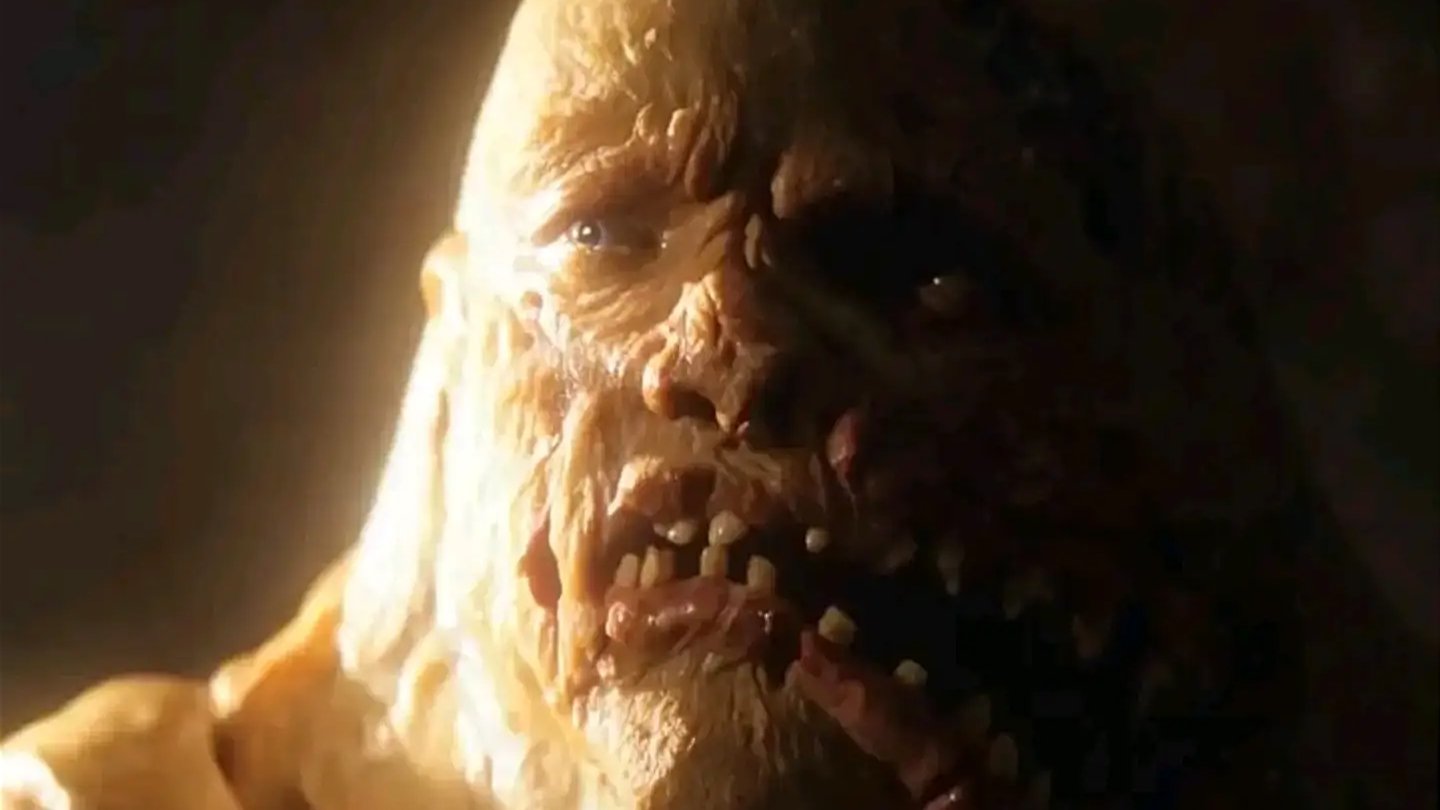
It is then that we see Matt’s body begin to deteriorate once again. He gradually transforms into a ‘Clayface’-like figure, with half his face resembling that of the classic comic book villain.
This highlights the contrast between his former identity and his new, monstrous form. He set out to reclaim his own face, but now, he no longer even has the guarantee that his body will remain stable.
What Clayface’s Ending Means for the DCU and Batman
In the comics, Matt Hagen is one of the versions of Clayface known for his shape-shifting abilities. This capacity to assume the forms of others makes him a dangerous opponent, a formidable villain for Batman.
Matt doesn’t rely solely on physical attacks; he can easily deceive anyone by concealing his true identity and taking on the appearance of another person.
The movie introduces a fresh perspective on this concept by incorporating AI, nanotechnology, and elements of body horror.
So, what does the future hold for Matt Hagen in the DCU?
The film’s ending suggests that Matt might attempt to return to the world of acting by leveraging his powers in some capacity.
Alternatively, he could assume the identities of famous figures, such as well-known actors, to take their places. Should anyone stand in his way, he would likely kill them without hesitation; having already murdered John, he is clearly capable of such acts to serve his own selfish interests.
According to this theory, all of these scenarios are plausible.
Furthermore, James Gunn has hinted at the possibility of Matt Hagen appearing in future DCU projects, though it has not yet been explicitly revealed which project will feature his next appearance.
While it is possible that he could confront Batman in The Brave and the Bold, nothing is confirmed as of now. Given that Batman is not currently present in the Gotham City depicted in this film, we might see Clayface make a dramatic, and perhaps brutal, entry in a future Batman film.
However, for me, the most compelling question arising from this ending isn’t about who Clayface might fight next or when he will reappear.
The real question is whether any trace of the human being Matt Hagen once was still remains within him. After all, he went to great lengths to reclaim his own face, only to end up stealing the identities of others and, ultimately, retreating into a fantasy of his own making. He may now have the power to take on anyone’s face, but there seems to be no way for him to reclaim his former life.
Furthermore, if Batman were to cross paths with Clayface in the future, would he view Matt solely as a villain—or would he also recognise the man who once desperately longed to get his life back?
Anyway, I’ve written quite a bit; now it’s your turn. What did you think of the ending? If you’ve already seen the movie, let me know; if you haven’t, I highly recommend watching it. It’s definitely worth the price of admission. I’d suggest catching it in a theatre to get the best possible experience.